
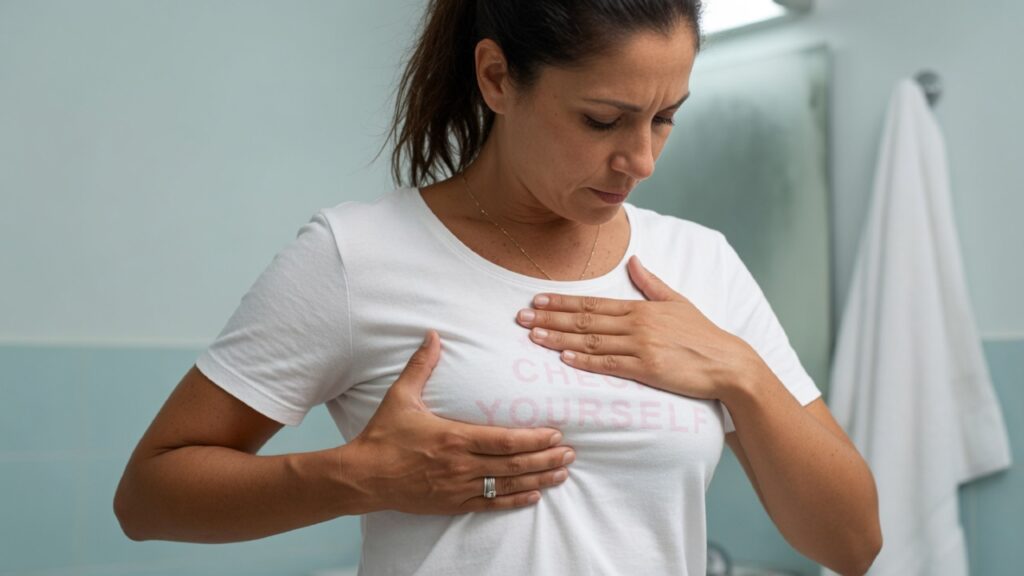
Examine Your Breasts

Breast cancer is the most common cause of cancer in women worldwide, accounting for 18% of all female malignancies.[1]
In the United States, a woman has more than a 12% lifetime risk of developing breast cancer and approximately 22% risk of dying from the disease.
Know Your Risk Factors Although 70% of affected women have no known predisposing factors, definite risk factors are well established.
- age: more than 3/4 of breast cancer cases occur in women 50 years or older
- family history: familial history and/or genetic predisposition
- menstrual/pregnancy history: early or delayed menarche, no pregnancies, or first live birth after age 35
- history of breast conditions
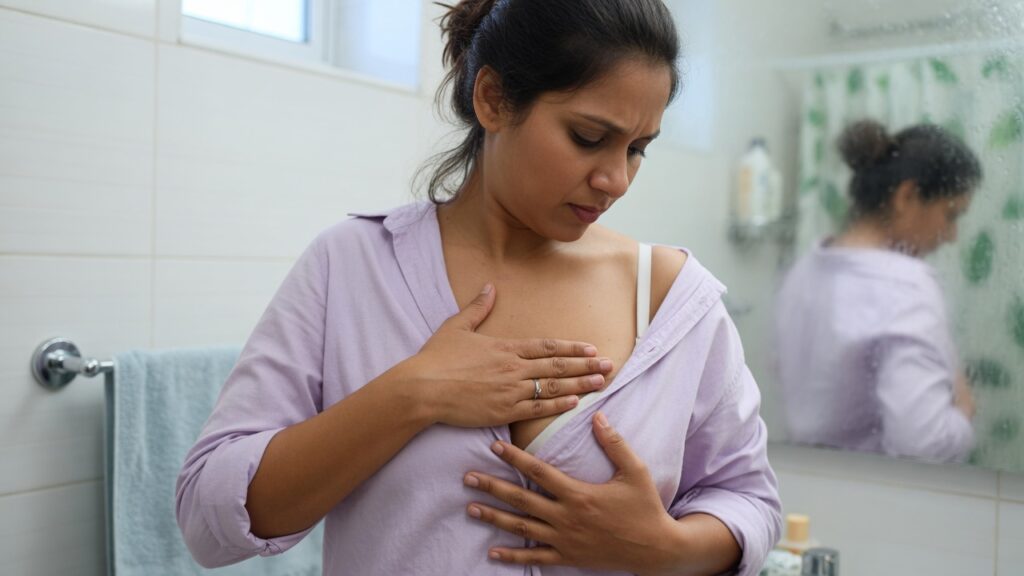
Examine Your Breasts Regularly
To perform a self breast examination, follow these steps:
- Choose a time when your breasts are not swollen or tender, which is typically a few days after your period.
- Stand in front of a mirror and look for any changes in the contour or shape of your breasts, as well as any dimpling, swelling, or other skin irregularities on or around your breasts. Also, check for any changes in the appearance of your nipples.
- Raise your arms and look for the same changes.
- Next, lie down and use the pads of your three middle fingers to check your entire breast and armpit area. Start from the top and move your fingers in small circles, applying light, medium, and firm pressure to feel different depths of the breast tissue.
- Repeat the process on your other breast.
- If you notice any changes, such as a new lump, sore spot, changes in the appearance of the skin, or nipple discharge, alert your healthcare professional.
Remember, a breast self-examination is not a substitute for regular clinical breast exams.
References:
- Cancer Principles & Practice of Oncology, 5th ed. Bates’ Guide to Physical Examination 8th ed.
Dr. Cassone



Responses